The following is a list of land borders I've crossed, along with the mode of transportation I've used to do so. (Bus means public bus while coach means long-haul motorcoach.) I'm including countries that are unconnected but for man-made structures as well as those which require waterway crossings. Borders are described by their official name where possible and otherwise by the two nearest cities on either side.
Argentina-Uruguay
Buenos Aires-Colonia (boat)
Austria-Hungary
Nickelsdorf-Hegyeshalom (coach, train)
Austria-Liechtenstein
Schaanwald-Feldkirch (bus, train)
Austria-Slovakia
Berg-Petrzalka (coach)
Belgium-France
Blandain-Sin (train)
Belgium-Luxembourg
Kleinbettingen-Sterpenich (train)
Canada-United States
Detroit-Windsor Tunnel (bus)
Highgate Springs-St. Armand (car)
Derby Line-Stanstead (coach, car)
Egypt-Israel
Taba (foot)
France-Germany
Huningue-Haltingen (foot)
France-Switzerland
Basel-St. Louis (train, foot)
Basel-Huningue (bus)
Le Chatelard-Vallorcine (train)
France-United Kingdom
Dover-Calais (train)
Germany-Switzerland
Basel-Haltingen (foot)
Freidrichshafen-Romanshorn (boat)
Rafz-Lottstetten (train)
Schaffhausen-Atlenburg (train)
Italy-Switzerland
Chiasso-Como (train)
Ribellasca (train)
Simplon Tunnel (train)
Italy-Vatican City
Vatican Museum (foot)
St. Peter's Square (foot)
Israel-Jordan
Yitzhak Rabin/Wadi Araba (foot)
Liechtenstein-Switzerland
Wartau-Balzers (bus)
Buchs-Schaan (train)
Malaysia-Singapore
Woodlands-Johor Bahru Causeway (bus, train)
Mexico-United States
Nogales-Nogales (foot)
San Ysidro-Tijuana (foot)
Showing posts with label Travel. Show all posts
Showing posts with label Travel. Show all posts
Sunday, February 17, 2008


Sunday, February 10, 2008
USA-Bound Flight Security Procedures
Listed below is a catalog of the security procedures for U.S.-bound flights at international airports I've passed through starting in Fall 2003 (once the 9/11 hysteria had largely subsided and more standardized procedures started to replace the ad hoc patches that were in place). This catalog also includes flights on U.S.-based carriers within a foreign country or between two foreign countries. All procedures are accurate as of the time I made the trip. I make no warranties as to what are currently in place.
For ease of reading, I define the following terms ahead of time:
WTMD: Walk-through metal detector. Assume no special procedures, e.g. shoe removal, unless otherwise specified.
X-ray machine: The standard machine we all know and love. Procedure may require separate inspection of laptop computer, liquid bag, etc.
Wanding: Personal inspection with handheld metal detector.
Patdown: Personal inspection by hand, unassisted by tools.
Secondary: Manual inspection of hand luggage. Unless otherwise specified as cursory, involves unpacking and repacking of luggage.
Gate-specific: Individual control point for specific gate with dedicated, segregated gate lounge.
Interview: Passengers questioned about destination, purpose of travel, length of stay, contents and/or control of luggage, etc.
Frankfurt-Main T1 (Nov. 2003, Transit Austria to USA, Lufthansa)
Additional security checkpoint for area of terminal reserved for USA flights. All passengers must show boarding pass, send hand luggage through x-ray machine, and submit to wanding/patdown. Checked luggage was screened in Frankfurt (though it was checked through to final destination and did not need to be reclaimed).
Paris-Roissy/Charles De Gaulle T1 (Jan. 2004, To USA, United)
Interview by airline-hired private security personnel to enter check-in area, x-ray and WTMD at entry to cluster of gates (all for USA flights), further interview by private security personnel before entering jetway, with some passengers sent to table for manual inspection of luggage and wanding.
Auckland-Jean Batten (Nov. 2004, To USA, Air New Zealand)
Standard WTMD and x-ray to enter airside area, additional checkpoint to enter area reserved for USA flights with another WTMD and x-ray (procedures no different than original checkpoint). After clearing checkpoint, some passengers pulled for manual inspection of luggage.
Madrid-Barajas (Jan. 2005, To USA, US Airways)
Interview by airline-hired private security personnel before checking in. X-ray and WTMD to enter airside area. Further interview by private security personnel before entering jetway. Separate security officer pulled passengers for manual inspection of luggage and wanding.
Amsterdam-Schiphol (Mar. 2005, Transit Spain to USA, Northwest)
Interview by airline-hired private security personnel before being allowed into gate area. Gate-specific WTMD and x-ray machine. Jackets needed to be removed (not required at checkpoint for intra-EU flights). No secondary inspection observed.
Frankfurt-Main T1 (Aug. 2005, To USA, Lufthansa)
Standard x-ray and WTMD to enter airside area. Additional security checkpoint for area of terminal reserved for USA flights. All passengers must show boarding pass, send hand luggage through x-ray machine, and submit to wanding/patdown. Checked luggage was screened in Frankfurt (though it was checked through to final destination and did not need to be reclaimed).
Sao Paolo-Guarulhos (Aug. 2005, Transit USA to Rio de Janeiro, United)
Passengers discharged into segregated arrivals passageway. X-ray and WTMD to reenter airside area. Interview by airline staff while on jetway. Secondary inspection table present but not in use.
Rio de Janeiro-Galeao/Antonio Carlos (Tom) Jobim (Aug. 2005, To USA via Sao Paolo, United)
Interview by airline staff before checking in. X-ray and WTMD to enter airside area. Further interview by airline staff while on jetway. Secondary inspection table present but not in use.
Sao Paolo-Guarulhos (Aug. 2005, Transit Rio de Janeiro to USA, United)
Passengers discharged into segregated arrivals passageway. X-ray and WTMD to reenter airside area. Interview by airline staff while on jetway (displaying boarding pass indicating through passage from Rio gets passengers waved through questioning). Two tables for secondary inspection present.
Vienna-Schwechat (Jan. 2006, To USA, Austrian)
Gate-specific security checkpoint with x-ray and WTMD, followed by cursory patdown for all passengers. Screened-off secondary inspection area present.
Osaka-Kansai (Apr. 2006, To USA, United)
X-ray for all luggage (checked and carry-on) to enter check-in area, with secondary inspection table present. Standard x-ray and WTMD to enter airside area, with shoe removal for passengers who alarm. Boarding pass check to enter area cordoned off for USA flights, with secondary inspection table present.
Toronto-Pearson (Jun. 2006, Transit United Kingdom to USA, Air Canada)
Transit passengers clear Canadian passport control and proceed to USA connections baggage claim. After boarding pass check, passengers (with checked luggage) must proceed through USA Customs and Border Protection pre-clearance, with passport control and interview followed by collection of customs declaration forms. Conveyor belt drop-off for checked luggage, followed by x-ray and WTMD with shoe removal.
Hong Kong-Chep Lap Kok (Mar. 2007, Transit USA to Singapore, United)
Passengers discharged into segregated arrivals passage. Standard x-ray and WTMD at security checkpoint for transit passengers. Cursory manual inspection of all hand luggage on jetway. Some passengers sent for wanding after hand luggage inspection.
Singapore-Changi (Mar. 2007, To USA via Japan, Singapore)
Gate-specific security checkpoint with standard x-ray and WTMD. Document authenticity check by government official after security.
Tokyo-Narita (Mar. 2007, Transit Singapore to USA, Singapore)
Passengers discharged into segregated arrivals passage. Standard x-ray and WTMD at security checkpoint for transit passengers. Some passengers pulled for secondary inspection before entering jetway.
Toronto-Pearson (May 2007, Transit Canada to USA, Air Canada)
Transit passengers enter USA connections baggage claim. After luggage tag check, passengers (with checked luggage) must proceed through USA Customs and Border Protection pre-clearance, with passport control and interview followed by collection of customs declaration forms. Conveyor belt drop-off for checked luggage, followed by x-ray and WTMD with shoe removal.
Halifax-Stanfield (Sep. 2007, Transit United Kingdom to USA, Air Canada)
Transit passengers clear Canadian passport control and proceed to USA departures area. Luggage is through-checked. After boarding pass check, security checkpoint with x-ray and WTMD with shoe removal. All passengers must proceed through USA Customs and Border Protection pre-clearance with passport control and interview.
Munich-Franz Joseph Strauss (Jan. 2008, To USA, Lufthansa)
Standard security checkpoint with x-ray and WTMD to enter airside area. Boarding pass check to enter area of terminal reserved for USA flights (non-USA citizens must supply Advance Passenger Information System data at this point), followed by additional, standard security checkpoint with x-ray and WTMD.
For ease of reading, I define the following terms ahead of time:
WTMD: Walk-through metal detector. Assume no special procedures, e.g. shoe removal, unless otherwise specified.
X-ray machine: The standard machine we all know and love. Procedure may require separate inspection of laptop computer, liquid bag, etc.
Wanding: Personal inspection with handheld metal detector.
Patdown: Personal inspection by hand, unassisted by tools.
Secondary: Manual inspection of hand luggage. Unless otherwise specified as cursory, involves unpacking and repacking of luggage.
Gate-specific: Individual control point for specific gate with dedicated, segregated gate lounge.
Interview: Passengers questioned about destination, purpose of travel, length of stay, contents and/or control of luggage, etc.
Frankfurt-Main T1 (Nov. 2003, Transit Austria to USA, Lufthansa)
Additional security checkpoint for area of terminal reserved for USA flights. All passengers must show boarding pass, send hand luggage through x-ray machine, and submit to wanding/patdown. Checked luggage was screened in Frankfurt (though it was checked through to final destination and did not need to be reclaimed).
Paris-Roissy/Charles De Gaulle T1 (Jan. 2004, To USA, United)
Interview by airline-hired private security personnel to enter check-in area, x-ray and WTMD at entry to cluster of gates (all for USA flights), further interview by private security personnel before entering jetway, with some passengers sent to table for manual inspection of luggage and wanding.
Auckland-Jean Batten (Nov. 2004, To USA, Air New Zealand)
Standard WTMD and x-ray to enter airside area, additional checkpoint to enter area reserved for USA flights with another WTMD and x-ray (procedures no different than original checkpoint). After clearing checkpoint, some passengers pulled for manual inspection of luggage.
Madrid-Barajas (Jan. 2005, To USA, US Airways)
Interview by airline-hired private security personnel before checking in. X-ray and WTMD to enter airside area. Further interview by private security personnel before entering jetway. Separate security officer pulled passengers for manual inspection of luggage and wanding.
Amsterdam-Schiphol (Mar. 2005, Transit Spain to USA, Northwest)
Interview by airline-hired private security personnel before being allowed into gate area. Gate-specific WTMD and x-ray machine. Jackets needed to be removed (not required at checkpoint for intra-EU flights). No secondary inspection observed.
Frankfurt-Main T1 (Aug. 2005, To USA, Lufthansa)
Standard x-ray and WTMD to enter airside area. Additional security checkpoint for area of terminal reserved for USA flights. All passengers must show boarding pass, send hand luggage through x-ray machine, and submit to wanding/patdown. Checked luggage was screened in Frankfurt (though it was checked through to final destination and did not need to be reclaimed).
Sao Paolo-Guarulhos (Aug. 2005, Transit USA to Rio de Janeiro, United)
Passengers discharged into segregated arrivals passageway. X-ray and WTMD to reenter airside area. Interview by airline staff while on jetway. Secondary inspection table present but not in use.
Rio de Janeiro-Galeao/Antonio Carlos (Tom) Jobim (Aug. 2005, To USA via Sao Paolo, United)
Interview by airline staff before checking in. X-ray and WTMD to enter airside area. Further interview by airline staff while on jetway. Secondary inspection table present but not in use.
Sao Paolo-Guarulhos (Aug. 2005, Transit Rio de Janeiro to USA, United)
Passengers discharged into segregated arrivals passageway. X-ray and WTMD to reenter airside area. Interview by airline staff while on jetway (displaying boarding pass indicating through passage from Rio gets passengers waved through questioning). Two tables for secondary inspection present.
Vienna-Schwechat (Jan. 2006, To USA, Austrian)
Gate-specific security checkpoint with x-ray and WTMD, followed by cursory patdown for all passengers. Screened-off secondary inspection area present.
Osaka-Kansai (Apr. 2006, To USA, United)
X-ray for all luggage (checked and carry-on) to enter check-in area, with secondary inspection table present. Standard x-ray and WTMD to enter airside area, with shoe removal for passengers who alarm. Boarding pass check to enter area cordoned off for USA flights, with secondary inspection table present.
Toronto-Pearson (Jun. 2006, Transit United Kingdom to USA, Air Canada)
Transit passengers clear Canadian passport control and proceed to USA connections baggage claim. After boarding pass check, passengers (with checked luggage) must proceed through USA Customs and Border Protection pre-clearance, with passport control and interview followed by collection of customs declaration forms. Conveyor belt drop-off for checked luggage, followed by x-ray and WTMD with shoe removal.
Hong Kong-Chep Lap Kok (Mar. 2007, Transit USA to Singapore, United)
Passengers discharged into segregated arrivals passage. Standard x-ray and WTMD at security checkpoint for transit passengers. Cursory manual inspection of all hand luggage on jetway. Some passengers sent for wanding after hand luggage inspection.
Singapore-Changi (Mar. 2007, To USA via Japan, Singapore)
Gate-specific security checkpoint with standard x-ray and WTMD. Document authenticity check by government official after security.
Tokyo-Narita (Mar. 2007, Transit Singapore to USA, Singapore)
Passengers discharged into segregated arrivals passage. Standard x-ray and WTMD at security checkpoint for transit passengers. Some passengers pulled for secondary inspection before entering jetway.
Toronto-Pearson (May 2007, Transit Canada to USA, Air Canada)
Transit passengers enter USA connections baggage claim. After luggage tag check, passengers (with checked luggage) must proceed through USA Customs and Border Protection pre-clearance, with passport control and interview followed by collection of customs declaration forms. Conveyor belt drop-off for checked luggage, followed by x-ray and WTMD with shoe removal.
Halifax-Stanfield (Sep. 2007, Transit United Kingdom to USA, Air Canada)
Transit passengers clear Canadian passport control and proceed to USA departures area. Luggage is through-checked. After boarding pass check, security checkpoint with x-ray and WTMD with shoe removal. All passengers must proceed through USA Customs and Border Protection pre-clearance with passport control and interview.
Munich-Franz Joseph Strauss (Jan. 2008, To USA, Lufthansa)
Standard security checkpoint with x-ray and WTMD to enter airside area. Boarding pass check to enter area of terminal reserved for USA flights (non-USA citizens must supply Advance Passenger Information System data at this point), followed by additional, standard security checkpoint with x-ray and WTMD.
Friday, February 08, 2008
Enough Security Is Enough
The above title was the headline of an article from the Lufthansa airline magazine, which I read on my recent trip to Munich. (More details about that trip will be forthcoming within a week or so.) If an American airline executive made such a public statement, he'd earn himself a one-way trip to Gitmo. But in Europe, it represents a measured, common-sense response to the post-9/11 security hysteria.
 At Frankfurt Airport, all passengers on flights bound for the USA had needed to pass through a special security checkpoint with x-ray inspection of hand luggage and a rather thorough wanding and patdown affectionately known as the "Frankfurt Feel-Up." Certain passengers would also be pulled for a manual inspection of their bags and/or their shoes. This secondary inspection was mandatory for all passengers, regardless of whether they were connecting or originating in Frankfurt (and hence had already passed through security control in Frankfurt). While I never received a satisfactory response for why a second checkpoint was needed, the two generally-accepted possible explanations are that there are special rules for U.S. bound flights and that connecting passengers needed to be screened at the airport of embarkation for the U.S. and the only way to do so was to re-screen everybody.
The article explained that the Frankfurt airport gate assignments were being reconfigured so that passengers who originated in Frankfurt or any other Schengen-zone country did not need to go through the Frankfurt Feel-Up. Whatever officials were in charge of such policy (and I don't know if they are U.S. officials, EU officials, airline officials, or airport officials) came to the realization that . Only those passengers connecting from outside the EU, who would arrive at the gates for U.S. flights via the SkyTrain, continue to face the Feel-Up (and given that some these passengers come from Africa, the Middle East, and India, it's a good idea).
Another pleasant security development I discovered during my trip was that the rule requiring duty-free liquids to be delivered to the gate of U.S.-bound flights has been relaxed. Among the EU countries, duty-free liquids packaged in a sealed, tamper-proof bag with a receipt from that day are considered secure. For some reason, the U.S. decided it needed its own, slightly different rule, just to make people's live more complicated. At Munich, however, I purchased my duty-free wine, beer, and mustard and took it through the special checkpoint for U.S. flights with no problems.
I commend the relevant officials (whoever they might be) for this step in the direction of a common-sense security procedure. Eventually, I'd like to see a Grand Unified Security Policy, in which all industrialized nations would recognize each other's security procedures as satisfactory and unify rules regarding liquids. Hopefully, someday, we'll get there.
 At Frankfurt Airport, all passengers on flights bound for the USA had needed to pass through a special security checkpoint with x-ray inspection of hand luggage and a rather thorough wanding and patdown affectionately known as the "Frankfurt Feel-Up." Certain passengers would also be pulled for a manual inspection of their bags and/or their shoes. This secondary inspection was mandatory for all passengers, regardless of whether they were connecting or originating in Frankfurt (and hence had already passed through security control in Frankfurt). While I never received a satisfactory response for why a second checkpoint was needed, the two generally-accepted possible explanations are that there are special rules for U.S. bound flights and that connecting passengers needed to be screened at the airport of embarkation for the U.S. and the only way to do so was to re-screen everybody.
The article explained that the Frankfurt airport gate assignments were being reconfigured so that passengers who originated in Frankfurt or any other Schengen-zone country did not need to go through the Frankfurt Feel-Up. Whatever officials were in charge of such policy (and I don't know if they are U.S. officials, EU officials, airline officials, or airport officials) came to the realization that . Only those passengers connecting from outside the EU, who would arrive at the gates for U.S. flights via the SkyTrain, continue to face the Feel-Up (and given that some these passengers come from Africa, the Middle East, and India, it's a good idea).
Another pleasant security development I discovered during my trip was that the rule requiring duty-free liquids to be delivered to the gate of U.S.-bound flights has been relaxed. Among the EU countries, duty-free liquids packaged in a sealed, tamper-proof bag with a receipt from that day are considered secure. For some reason, the U.S. decided it needed its own, slightly different rule, just to make people's live more complicated. At Munich, however, I purchased my duty-free wine, beer, and mustard and took it through the special checkpoint for U.S. flights with no problems.
I commend the relevant officials (whoever they might be) for this step in the direction of a common-sense security procedure. Eventually, I'd like to see a Grand Unified Security Policy, in which all industrialized nations would recognize each other's security procedures as satisfactory and unify rules regarding liquids. Hopefully, someday, we'll get there.
Wednesday, January 23, 2008
Ben's Barcelona Bible
If you are inclined to use public transportation there is a train that runs from the El Prat airport to downtown every 30 minutes. It takes about 20-30 minutes to get there. However, a cab fare is relatively affordable and efficient at about €20, before surcharges for airport trips and luggage of about €5 kick in.
2.
B. Money
The official currency of 1. Gaudi’s houses
Gaudi’s three most well-known residences are the Palau Guell, the Casa Battlo, and the Casa Mila (also known as La Pedrera). All three are located on La Rambla or the nearby Passeig de Gracia, and all three are open to the public. My personal recommendation is to visit Casa Mila, which includes period rooms, an exhibit on Gaudi’s life and works, and a terrace area on the roof. Lines may be long, particularly during the morning hours.
The
Gaudi’s sculpture garden, located in the north area of the city, is a cross between Candyland and Alice in Wonderland. It is perhaps the best example of Gaudi unleashed (and by unleashed, I mean on an acid trip). I don’t know quite how else to describe it besides saying that it is a spectacle worth seeing. The closest metro stop is about a kilometer away, and the walk to the park does inlolve a sizeable uphill section, so consider yourself warned. If you make it there, do ensure you take a walk away from the central plaza, and you’ll see that the rest of the park is designed in a more mellow, subtle, almost Southwestern motif.
B. Museums
1. Fundacion Joan Miro
A museum dedicated to the early 20th century artist Joan Miro is located on Montjuic. It is comprised of a rotating temporary exhibit and a permanent collection. You can purchase tickets to either the temporary exhibit or both, but not the permanent collection separately. The cool thing about Miro, I found, was how he kept certain motifs (the bold primary colors, the swirling black lines and dots) in his artwork throughout his life while applying them to different media, moving from paintings to sculpture and even tapestries. The whole museum should take no more than ninety minutes.
There is a museum displaying a chronology of Picasso’s work in the
 3.
3.
The national
D. La Rambla
E. The Port
You can have a nice seaside stroll in
III. DINING
1. Breakfast
Most Spanish hotels do not include breakfast in the price of the room the way other European hotels are wont to do. If yours does, congratulations – you lucked out! Otherwise, a typical Spanish breakfast consists of a café or chocolate with a croissant a la plancha or churros or some other pastry. It is usually taken in a café. Keep in mind that if you stand or sit at the counter your meal will cost less than if you sat at a table, as no service charge is included. Etiquette is to leave your spare change (no more than €1 per person at absolute most, and more like €0.50) as a tip to the bartender. If you want to start your day with a true sugar high, find somewhere that offers a Xoco Bomba, which is rich chocolate, condensed milk, and whipped cream.
 2. Lunch
The day’s biggest meal is lunch and is traditionally served around 2PM. The only restaurant I will single out for you is called Els Quatre Gats, which is where Picasso and his bohemian buddies used to hang out and be brilliant. In addition to being superb food, its three-course prix fixe menu that also includes wine, is one of the city’s best deals at €10.97 plus VAT. Ensure that restaurants include service in the bill (most should), but you should still tip some spare change (no more than 5%). Avoid any restaurants with picture menus, as they likely offer low-quality, overpiced food to tourists. An English language menu is not necessarily a deal killer. If a restaurant is filled with locals, chances are you can get a good meal there. Steer well clear of La Rambla if you want to sample authentic food.
Dinner tends to be a more casual, relaxed affair than lunch. Many people start their evenings at tapas bars, where you can get single piece canapes and other snack while having a drink. I do not know how the tapas bar etiquette works as far as pricing, ordering, etc., as I was too intimidated to try. The actual meal is a relatively short, simple affair, consisting of something like a platter of assorted cold cuts and cheeses, or a sandwich, or a salad. Any Spanish cured ham is delicious. I also recommend manchego and
Tuesday, January 22, 2008
Von Amerika Nach München
Well, tomorrow morning I head off for yet another transatlantic trip. This time, I'm visiting close friend and faithful reader (and correspondent) Tigger who now resides in the heart of Bavaria. We'll have a report and photos when I return, along with a week of Super Bowl-themed top five lists to commemorate the Greatest Team Ever's quest for perfection.
In the meanwhile, tomorrow's post will fulfill yet another request for a travel destination review. It's actually a reprint of the Barcelona bible I drafted back in 2005. It's long, so hopefully, it will tide you all over for the next five days. (Keep in mind that information presented was correct back in 2005 and I make no guarantees as to whether any aspect, particularly prices, remains up to date.)
Until next week, I leave you with my best Heidi Klum impression: "Auf Weidersehen!"
In the meanwhile, tomorrow's post will fulfill yet another request for a travel destination review. It's actually a reprint of the Barcelona bible I drafted back in 2005. It's long, so hopefully, it will tide you all over for the next five days. (Keep in mind that information presented was correct back in 2005 and I make no guarantees as to whether any aspect, particularly prices, remains up to date.)
Until next week, I leave you with my best Heidi Klum impression: "Auf Weidersehen!"
Wednesday, January 16, 2008
Top Five Unique Airport Runways
 1. Gibraltar Airport, Gibraltar
This airport's 6,000 foot runway is longer than the promontory of Gibraltar is wide (about 4,000) feet. As a result, the final third of the runway is on landfill protruding into the Atlantic Ocean. But the unique feature is that the only road connecting Gibraltar with the rest of Europe crosses the runway at grade. When a flight is taking off or landing, security personnel block the road on either side. Once the flight is off the runway, the gates open up and private vehicles drive straight across.
 2. Barra Airport, Outer Hebrides, Scotland
At this airport, planes take-off and land on the beach of the Traigh Mhor. Wooden posts mark where each of the the three runways starts and ends. But when the tide comes in, the runways disappear. British Airways, which runs scheduled service to and from Barra, must therefore schedule flights to correspond with low tides.
 3. Princess Juliana Airport, St. Maarten
This airport's runway sits mere feet from Maho Beach. At 7,152 feet, it's barely long enough to handle the widebody jets that fly in from Europe. To ensure enough room for landing, pilots must fly at an extremely low altitude over the beach. As a result, beachgoers are often thrown into the surf thanks to the jet blast they experience at close proximity. Check out this video to see how close the aircraft get to the beach and this one to see what the jet blast can do.
 4. Madeira Airport, Funchal, Madeira (Portugal)
When originally constructed, this runway was wedged between tall mountains on one side and the ocean on the other. At only 4,600 feet, it was scarcely long enough for commercial flights from the European mainland. After an TAP Air Portugal 727 sailed off the end of the runway and over a cliff, crashing into the beach, the airport authorities decided to extend the runway. Without much additional land to work with, the airport constructed the runway extension over the water, supporting it with giant pillars around which people can swim or boat at high tide.
 5. Lukla Airport, Lukla, Nepal
This airport, nestled among the Himalayas, is the conduit for hikers seeking to scale Mt. Everest. The 1,476-foot runway is sloped downward, with a wall of mountains behind the higher end and a sheer 2,000-foot drop at the lower end. Airplanes take off downhill, and if they can't reach takeoff velocity while on the runway, they drop into the valley and hopefully gain enough lift before they hit bottom. Pilots seeking to land must do so uphill and must keep in mind that the mountains in place do not allow sufficient room for airlines to abort landing and go around. If you aren't unable to land, you're dead.
Monday, January 14, 2008
Zooming In On Zurich
As happens from time to time here at It's A Magical World!, one of our faithful readers (and it's usually the same one every time) writes in to request travel advice for some far-flung location that I've happened to have visited. Today's spotlight shines on Zurich.
What To See
Basically, leave Zurich. While Zurich is a pleasant, easily-navigable business center, its tourist appeal is its status as a rail transit hub. Zurich is an hour (or an hour and change) away from several, more interesting destinations:
Bern - Switzerland's capital boasts parliamentary buildings, national museums, performing arts venues, Classical architecture, and a beautiful central town square.
 Lucerne - This postcard-perfect town sits on a pristine lake at the foot of a prominent mountain. In the old town, medieval-era guilds painted frescos on the side of buildings. They remain today.
Basel - While this city on the Rhine may primarily be a shipping center, Basel is uniquely located at the confluence of three countries, allowing you to walk from Switzerland through Germany into France in the span of about eight minutes.
Schaffhausen - Another town with a beautifully-decorated central square (though largely reconstructed after it was "accidentally" bombed by the Allies in WWII). Be sure to check out the Rhinefall, which, though it might not be Europe's tallest, is certainly Europe's most powerful waterfall.
 Lauterbrunnen Valley - Okay, so it's about two hours from Zurich to Interlaken, which is the gateway to the Lauterbrunnen Valley. But it's worth the trip. From there, a series of trains and trams takes you into the heart of the Alps. The mountains tower literally 10,000 feet above the floor of the valley. You can see four distinct climactic zones as you look upward. Many of the towns on the lip of the valley prohibit cars, adding to the pastoral nature of the area. When the snow melts during the spring, waterfalls emerge everywhere. If weather permits, my recommendation is to take the tram up to Murren and then hike down into the valley. It is one of the most splendid walks I've ever experienced.
Of course, if you insist upon staying in Zurich, I recommend you walk south from the main train station along the Linmatquai, cross over the Quaibrucke, and walk back up the other side. There are some interesting shops, markets, cobblestone streets, parks, and churches. I'll give you about three hours before you get bored and hop on a train elsewhere.
What To Do
If sightseeing grows old, go for a walk! Switzerland has a network of footpaths criss-crossing the country, all of which are well-marked and well-maintained. Nothing beats a hike through the Alps. Depending on the time of year, you can even go skiing.
What To Eat
Swiss food isn't particularly distinctive. With three distinct areas where three different languages are spoken, cuisine in each region tends to resemble that of its neighbor, rather than anything indigenously Swiss. In other words, you'll find German food in Zurich, French food in Geneva, etc. However, the Swiss tend to use more cheese than any of its neighbors, for obvious reasons. As a lunch, I recommend a raclette, which is made by placing a block of Gruyere under a heatlamp then scooping off the top layer of melted cheese and placing it on a slice of baguette. I'd also suggest Rosti, which traditionally are fried, shredded potatoes, though I prefer variations that bake the potatoes in the oven along with cheese, meat, or vegetables. And of course, fondue. Be prepared to pay through the teeth for any of these delicacies.
What To Drink
In central Europe, you really can't go wrong with beer of just about any type. I'd recommend that you make a point to try Swiss wine. The quality is comparable to French and Italian wines, but since the limited size of the Swiss wine industry essentially precludes exports, you get an additional novelty factor.
How To Get Around
As this space has mentioned before, the Swiss rail system is second to none in terms of coverage, frequency, and punctuality. No matter where you want to go, a train will be leaving within an hour. You'll be paying for this privilege, however. If you'll be in Switzerland for four days and plan on riding the rails a lot, buy a Swiss Pass for CHF 255. Otherwise, there really is no good way to save money. Make sure you purchase your ticket (and validate it, if necessary) before boarding, because if you're caught onboard without one, penalties are severe.
What To See
Basically, leave Zurich. While Zurich is a pleasant, easily-navigable business center, its tourist appeal is its status as a rail transit hub. Zurich is an hour (or an hour and change) away from several, more interesting destinations:
Bern - Switzerland's capital boasts parliamentary buildings, national museums, performing arts venues, Classical architecture, and a beautiful central town square.
 Lucerne - This postcard-perfect town sits on a pristine lake at the foot of a prominent mountain. In the old town, medieval-era guilds painted frescos on the side of buildings. They remain today.
Basel - While this city on the Rhine may primarily be a shipping center, Basel is uniquely located at the confluence of three countries, allowing you to walk from Switzerland through Germany into France in the span of about eight minutes.
Schaffhausen - Another town with a beautifully-decorated central square (though largely reconstructed after it was "accidentally" bombed by the Allies in WWII). Be sure to check out the Rhinefall, which, though it might not be Europe's tallest, is certainly Europe's most powerful waterfall.
 Lauterbrunnen Valley - Okay, so it's about two hours from Zurich to Interlaken, which is the gateway to the Lauterbrunnen Valley. But it's worth the trip. From there, a series of trains and trams takes you into the heart of the Alps. The mountains tower literally 10,000 feet above the floor of the valley. You can see four distinct climactic zones as you look upward. Many of the towns on the lip of the valley prohibit cars, adding to the pastoral nature of the area. When the snow melts during the spring, waterfalls emerge everywhere. If weather permits, my recommendation is to take the tram up to Murren and then hike down into the valley. It is one of the most splendid walks I've ever experienced.
Of course, if you insist upon staying in Zurich, I recommend you walk south from the main train station along the Linmatquai, cross over the Quaibrucke, and walk back up the other side. There are some interesting shops, markets, cobblestone streets, parks, and churches. I'll give you about three hours before you get bored and hop on a train elsewhere.
What To Do
If sightseeing grows old, go for a walk! Switzerland has a network of footpaths criss-crossing the country, all of which are well-marked and well-maintained. Nothing beats a hike through the Alps. Depending on the time of year, you can even go skiing.
What To Eat
Swiss food isn't particularly distinctive. With three distinct areas where three different languages are spoken, cuisine in each region tends to resemble that of its neighbor, rather than anything indigenously Swiss. In other words, you'll find German food in Zurich, French food in Geneva, etc. However, the Swiss tend to use more cheese than any of its neighbors, for obvious reasons. As a lunch, I recommend a raclette, which is made by placing a block of Gruyere under a heatlamp then scooping off the top layer of melted cheese and placing it on a slice of baguette. I'd also suggest Rosti, which traditionally are fried, shredded potatoes, though I prefer variations that bake the potatoes in the oven along with cheese, meat, or vegetables. And of course, fondue. Be prepared to pay through the teeth for any of these delicacies.
What To Drink
In central Europe, you really can't go wrong with beer of just about any type. I'd recommend that you make a point to try Swiss wine. The quality is comparable to French and Italian wines, but since the limited size of the Swiss wine industry essentially precludes exports, you get an additional novelty factor.
How To Get Around
As this space has mentioned before, the Swiss rail system is second to none in terms of coverage, frequency, and punctuality. No matter where you want to go, a train will be leaving within an hour. You'll be paying for this privilege, however. If you'll be in Switzerland for four days and plan on riding the rails a lot, buy a Swiss Pass for CHF 255. Otherwise, there really is no good way to save money. Make sure you purchase your ticket (and validate it, if necessary) before boarding, because if you're caught onboard without one, penalties are severe.
Saturday, January 05, 2008
Top Five Hints For International Air Travel
As someone who has flown over 255,000 miles since 2003 (yes, I've kept track), I want to share some strategies for how to make international flights a more pleasurable experience and minimize the attendant hassles.
 1. Fly foreign airlines
Almost unconditionally, flying a non-American airline to an intercontinental destination will yield a more pleasurable experience. It starts with the booze that's free on virtually all foreign airlines but costs mucho dinero on virtually all U.S.-based airlines. It continues with the attitudes of flight attendants -- while American FA's see their jobs as nothing more than ensuring you get to your destination safely, many foreign FA's actually want you to legitimately enjoy your trip. Plus, when you fly a foreign airline, your cultural experience begins the second you set foot on the plane.
2. Own your misconnection
Airlines will allow you to book a 40-minute late afternoon domestic-to-international connection through O'Hare Airport. Prudent travelers will avoid doing so. Ensure you have plenty of time to make your connection in case of delays. On the way back, or if connecting abroad, ensure you have plenty of time to complete any customs or immigration formalities. Be especially wary if you're taking the only daily flight from a given city to a given destination -- if you miss it, you might be waiting a full day for the next trip. Better to spend three hours awaiting a connection than 24 hours dealing with a misconnection. (By contrast, connections abroad are less of a concern, since once you're already in Europe, it's easier for the airlines to get you where you ultimately need to go.) Flights are late all the time, and while airlines will get you to your destination, they might not be able to do so quickly. Advance planning can reduce such inconveniences.
3. Scope things out in advance
Thanks to the internet, travelers have a wealth of information at the their fingertips which will help them navigate unfamiliar foreign airlines and airports. If airlines allow you pick your seats in advance, visit seatguru.com to find out where you'll be most comfortable sitting on the plan where you'll be stuck for eight to twelve hours. Most airport websites have schematic maps allowing travelers to know where they need to go for check in. Some even have videos explaining how to navigate customs and immigration channels. If you're transferring between terminals, or if your departure airport has multiple terminals, it's helpful to know in advance where your flights will arrive depart.
 4. Become an elite-level frequent flier
If you reach a certain annual frequent-flier mile threshold, you can earn elite status. This status grants you such privileges as the right to use special check-in desks with reduced lines, special security checkpoints in some airports, and airline VIP lounges. Not only do these lounges provide better food and drink than you can get on the plane, they have customer service representatives who can rebook you as necessary in case of a misconnection. Furthermore, elite-level frequent fliers improve their chances at upgrades and are more likely to get special attention from airline employees who wish to thank their loyal customers. The 50,000 miles it takes to reach this level may seem like a lot, but individuals who travel internationally three or four times a year can come close just by confining their travels to one airline or alliance.
5. Relax and enjoy yourself
It may be hard to stay positive when dealing with asinine security procedures, cantankerous immigration officials, and never-ending queues. However, the fact of the matter is that the ability to step on an airplane and be transported across an ocean overnight, all for a few hundred dollars, is an amazing feat. It used to take days on an ocean liner to cover the ground that a plane can travel in eight hours. Besides, there is something magical about soaring through the air. To this day, I am filled with excitement anytime an airplane speeds down the runway on its takeoff roll. Commercial flight remains a miracle of engineering and nothing the government or the airlines do can really take that feeling away.
 1. Fly foreign airlines
Almost unconditionally, flying a non-American airline to an intercontinental destination will yield a more pleasurable experience. It starts with the booze that's free on virtually all foreign airlines but costs mucho dinero on virtually all U.S.-based airlines. It continues with the attitudes of flight attendants -- while American FA's see their jobs as nothing more than ensuring you get to your destination safely, many foreign FA's actually want you to legitimately enjoy your trip. Plus, when you fly a foreign airline, your cultural experience begins the second you set foot on the plane.
2. Own your misconnection
Airlines will allow you to book a 40-minute late afternoon domestic-to-international connection through O'Hare Airport. Prudent travelers will avoid doing so. Ensure you have plenty of time to make your connection in case of delays. On the way back, or if connecting abroad, ensure you have plenty of time to complete any customs or immigration formalities. Be especially wary if you're taking the only daily flight from a given city to a given destination -- if you miss it, you might be waiting a full day for the next trip. Better to spend three hours awaiting a connection than 24 hours dealing with a misconnection. (By contrast, connections abroad are less of a concern, since once you're already in Europe, it's easier for the airlines to get you where you ultimately need to go.) Flights are late all the time, and while airlines will get you to your destination, they might not be able to do so quickly. Advance planning can reduce such inconveniences.
3. Scope things out in advance
Thanks to the internet, travelers have a wealth of information at the their fingertips which will help them navigate unfamiliar foreign airlines and airports. If airlines allow you pick your seats in advance, visit seatguru.com to find out where you'll be most comfortable sitting on the plan where you'll be stuck for eight to twelve hours. Most airport websites have schematic maps allowing travelers to know where they need to go for check in. Some even have videos explaining how to navigate customs and immigration channels. If you're transferring between terminals, or if your departure airport has multiple terminals, it's helpful to know in advance where your flights will arrive depart.
 4. Become an elite-level frequent flier
If you reach a certain annual frequent-flier mile threshold, you can earn elite status. This status grants you such privileges as the right to use special check-in desks with reduced lines, special security checkpoints in some airports, and airline VIP lounges. Not only do these lounges provide better food and drink than you can get on the plane, they have customer service representatives who can rebook you as necessary in case of a misconnection. Furthermore, elite-level frequent fliers improve their chances at upgrades and are more likely to get special attention from airline employees who wish to thank their loyal customers. The 50,000 miles it takes to reach this level may seem like a lot, but individuals who travel internationally three or four times a year can come close just by confining their travels to one airline or alliance.
5. Relax and enjoy yourself
It may be hard to stay positive when dealing with asinine security procedures, cantankerous immigration officials, and never-ending queues. However, the fact of the matter is that the ability to step on an airplane and be transported across an ocean overnight, all for a few hundred dollars, is an amazing feat. It used to take days on an ocean liner to cover the ground that a plane can travel in eight hours. Besides, there is something magical about soaring through the air. To this day, I am filled with excitement anytime an airplane speeds down the runway on its takeoff roll. Commercial flight remains a miracle of engineering and nothing the government or the airlines do can really take that feeling away.
Sunday, December 16, 2007
Top Five Places I'll Never Be Able To Visit
Never is probably an overstatement, but visiting any of the places on this list would require either navigating some serious red tape or some out-and-out deception.
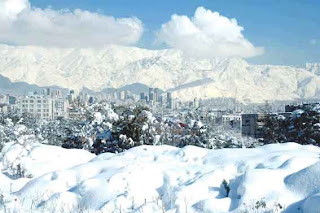 1. Tehran, Iran
I found out just the other day that, counter to the desert outpost stereotype of a Middle Eastern city, Tehran sits below a towering range of mountains which regularly experiences snowfall during the winter months. Just a few kilometers outside the city lies the start of the world's highest ski lift, taking passengers near to the top of a ridge near the 13,005 foot summit of Mt. Tochal. If you look at pictures of Tehran and ignore the signs in Farsi, you'd swear it was Denver. But while Mahmoud Ahmadinejad has proclaimed that his country is open to American tourism, a visa application nonetheless requires you to provide two residents of Iran who will serve as references. I'm told that the government actually shows up and grills them.
2. Mecca, Saudi Arabia
Getting a visa for Saudi Arabia is trouble enough, since the country does not allow people to enter for touristic purposes. Therefore, I need to find some business purpose to go to the country, or suddenly find family there, or claim I'm a religious pilgrim. Even if I make into Saudi Arabia though, the holy city of Mecca is only open to those of the Muslim faith. I'd love to experience the spectacle of the Hajj and take in the beauty of the Kaaba firsthand, but I don't know whether I'm willing to convert to a new faith to do so.
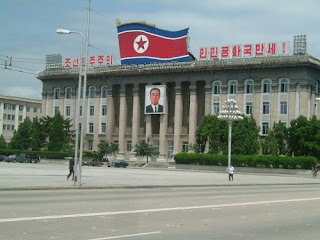 3. Pyongyang, North Korea
Kim Jong Il's dystopia is something straight out of 1984. A massive planned society, every member of North Korea's homogenized society knows their role and follows the rules, leaving the city squeaky clean and the roads largely free of traffic (which is easy to do since only the highest-ranking members of the party faithful are allowed to drive). Monumental, futurist works of architecture are dedicated in honor of the Eternal President and the Dear Leader. American tourists are only allowed into the country a couple of weeks each year, and then, they're only allowed on strictly controlled tours run by government officials. In other words, you only see what they want you to see.
4. Havana, Cuba
Cuba is the ultimate forbidden fruit for Americans. While seeing a world essentially frozen in the 1950's sounds cool, the fact of the matter is that Cuba is so attractive largely because it's off-limits. Not too long ago, Americans could circumvent the embargo by traveling via a third country and avoiding the telltale passport stamp. But the Bush administration has decided to enforce a policy that's obviously worked so well over the past forty years by cracking down on individual tourists who visit Fidel Castro's regime. Once the old guy kicks the bucket, American tourists will flock to the island, but once that happens, what's the point of bothering to go?
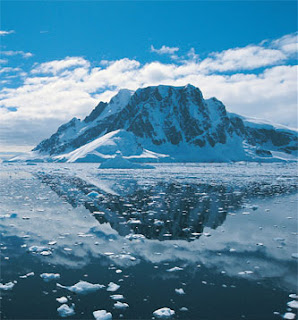 5. Antarctica
You can't exactly book a commercial flight to Antarctica, though if you're willing to do some research and throw some money at it, you can find yourself an eco-tourism cruise expedition that will take you to the bottom of the world. Therein lies the rub, since I tend to avoid both cruises and organized tours. Additionally, an expedition exploring anything beyond the tip of the Antarctic Peninsula would involve some intensive, cold-weather hiking and camping. I'll hike all day and I'll sleep in crappy budget hotels in third-world countries, but camping? Count me out.
 1. Tehran, Iran
I found out just the other day that, counter to the desert outpost stereotype of a Middle Eastern city, Tehran sits below a towering range of mountains which regularly experiences snowfall during the winter months. Just a few kilometers outside the city lies the start of the world's highest ski lift, taking passengers near to the top of a ridge near the 13,005 foot summit of Mt. Tochal. If you look at pictures of Tehran and ignore the signs in Farsi, you'd swear it was Denver. But while Mahmoud Ahmadinejad has proclaimed that his country is open to American tourism, a visa application nonetheless requires you to provide two residents of Iran who will serve as references. I'm told that the government actually shows up and grills them.
2. Mecca, Saudi Arabia
Getting a visa for Saudi Arabia is trouble enough, since the country does not allow people to enter for touristic purposes. Therefore, I need to find some business purpose to go to the country, or suddenly find family there, or claim I'm a religious pilgrim. Even if I make into Saudi Arabia though, the holy city of Mecca is only open to those of the Muslim faith. I'd love to experience the spectacle of the Hajj and take in the beauty of the Kaaba firsthand, but I don't know whether I'm willing to convert to a new faith to do so.
 3. Pyongyang, North Korea
Kim Jong Il's dystopia is something straight out of 1984. A massive planned society, every member of North Korea's homogenized society knows their role and follows the rules, leaving the city squeaky clean and the roads largely free of traffic (which is easy to do since only the highest-ranking members of the party faithful are allowed to drive). Monumental, futurist works of architecture are dedicated in honor of the Eternal President and the Dear Leader. American tourists are only allowed into the country a couple of weeks each year, and then, they're only allowed on strictly controlled tours run by government officials. In other words, you only see what they want you to see.
4. Havana, Cuba
Cuba is the ultimate forbidden fruit for Americans. While seeing a world essentially frozen in the 1950's sounds cool, the fact of the matter is that Cuba is so attractive largely because it's off-limits. Not too long ago, Americans could circumvent the embargo by traveling via a third country and avoiding the telltale passport stamp. But the Bush administration has decided to enforce a policy that's obviously worked so well over the past forty years by cracking down on individual tourists who visit Fidel Castro's regime. Once the old guy kicks the bucket, American tourists will flock to the island, but once that happens, what's the point of bothering to go?
 5. Antarctica
You can't exactly book a commercial flight to Antarctica, though if you're willing to do some research and throw some money at it, you can find yourself an eco-tourism cruise expedition that will take you to the bottom of the world. Therein lies the rub, since I tend to avoid both cruises and organized tours. Additionally, an expedition exploring anything beyond the tip of the Antarctic Peninsula would involve some intensive, cold-weather hiking and camping. I'll hike all day and I'll sleep in crappy budget hotels in third-world countries, but camping? Count me out.
Sunday, November 25, 2007
Top Five Worst Origin/Destination Airports (Domestic Edition)
1. Atlanta-Hartsfield
The MARTA offers a one-seat ride from downtown to the airport. The benefits of departing ATL end there. Once at the airport, you need to negotiate the horribly congested central security checkpoints, take the underground train to one of six parallel linear concourses, make your way above ground, and walk to your gate, which can be quite some distance if it's on either end of the concourse. There are no moving sidewalks within the concourses. But what puts ATL atop this list is the asinine procedure for international arrivals: After waiting for your bag and clearing customs, you must recheck your bag and clear security (including full shoe removal and liquid confiscation), even if you're not connecting to another flight. Then, you take the train to the main terminal and wait at the baggage claim for your luggage a second time.
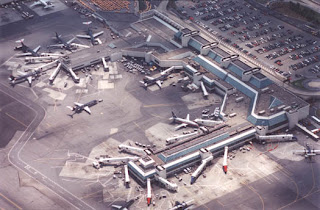 2. New York-LaGuardia
The cramped plot of land that LaGuardia occupies makes you wonder how a major airport even functions in such a small area. Indeed, it barely functions, with takeoff queues a good 20 or 30 aircraft deep at peak times for one of two runways. On your way to the airport, you must figure out which cramped, undersized terminal houses your airline, which is a task made more complicated by the fact that certain airlines (i.e. Delta) depart from different locations depending on your destination. LaGuardia is relatively close to Manhattan, but there is no good public transit connection to the airport. You are left either taking a bus (and good luck finding guidance regarding which bus to take) or a lengthy taxi ride. As anyone who has been to New York knows, a short distance does not ensure a quick ride.
3. Las Vegas-McCarran
Ninety percent of the time, McCarran is satisfactorily efficient. But when it comes to peak travel periods (Friday evening arrivals, Sunday afternoon departures, and anytime immediately before or after a major convention), all hell breaks lose. The ticket counter area is too small to handle peak crowds, so lines routinely stretch out onto the sidewalk. The security checkpoints for the C and D gates are on a balcony cantilevered over the baggage claim. While airport authority has upgraded the area, it remains too small for peak crowds. Departing out of the D Gates (basically any domestic airline besides US Airways and Southwest) requires a train ride to a remote terminal. While waiting for your flight, you can make use of slot machines that have the worst odds in Vegas or purchase the most overpriced food at any airport in the country. Arriving at McCarran, assuming you survive the potentially intolerable wait for your bags, you are faced with what can be an hour-long wait in the taxi queue at peak times.
 4. Washington-Dulles
Dulles is horrible for origin/destination traffic for all the same reasons that it sucks as a connecting airport, plus the fact that it has no connection to DC's otherwise comprehensive Metro rail system. Consolidated, central security checkpoints make for long waits in the mornings and late afternoons. Up until recently, they didn't even have special lanes for frequent fliers and first class passengers. Getting from the security area to your gate requires waiting for a mobile lounge, which is a glorious bus, to depart according to a fixed schedule (i.e. not yours). The food and entertainment offerings in the gate area are also lacking for an airport this size. If you're arriving from Latin America, you better hope your plane doesn't arrive early, since the customs officers are scheduled to show up at 7:00 a.m. and not a moment before.
5. Miami
Miami is the only airport I've visited in the 50 states where public address announcements are made first in Spanish, and only then (if at all) in English. You feel like a foreigner in your own country. Latin American flights arrive in the early morning hours, overwhelming the customs processing areas. Since most of the non-American passengers require visas, the process is predictably slower than at airport handling mainly trans-Atlantic international traffic. Security checkpoints are in cramped quarters atop escalators, requiring passengers to wait in line before being allowed to go upstairs and wait in line. (To its credit, I have reason to believe that since my last visit to MIA, the airport has engaged in renovations that will alleviate these bottlenecks.) If you're driving to the airport (and there's really no other effective way to get there), you're stuck on one of two oft-crowded expressways.
The MARTA offers a one-seat ride from downtown to the airport. The benefits of departing ATL end there. Once at the airport, you need to negotiate the horribly congested central security checkpoints, take the underground train to one of six parallel linear concourses, make your way above ground, and walk to your gate, which can be quite some distance if it's on either end of the concourse. There are no moving sidewalks within the concourses. But what puts ATL atop this list is the asinine procedure for international arrivals: After waiting for your bag and clearing customs, you must recheck your bag and clear security (including full shoe removal and liquid confiscation), even if you're not connecting to another flight. Then, you take the train to the main terminal and wait at the baggage claim for your luggage a second time.
 2. New York-LaGuardia
The cramped plot of land that LaGuardia occupies makes you wonder how a major airport even functions in such a small area. Indeed, it barely functions, with takeoff queues a good 20 or 30 aircraft deep at peak times for one of two runways. On your way to the airport, you must figure out which cramped, undersized terminal houses your airline, which is a task made more complicated by the fact that certain airlines (i.e. Delta) depart from different locations depending on your destination. LaGuardia is relatively close to Manhattan, but there is no good public transit connection to the airport. You are left either taking a bus (and good luck finding guidance regarding which bus to take) or a lengthy taxi ride. As anyone who has been to New York knows, a short distance does not ensure a quick ride.
3. Las Vegas-McCarran
Ninety percent of the time, McCarran is satisfactorily efficient. But when it comes to peak travel periods (Friday evening arrivals, Sunday afternoon departures, and anytime immediately before or after a major convention), all hell breaks lose. The ticket counter area is too small to handle peak crowds, so lines routinely stretch out onto the sidewalk. The security checkpoints for the C and D gates are on a balcony cantilevered over the baggage claim. While airport authority has upgraded the area, it remains too small for peak crowds. Departing out of the D Gates (basically any domestic airline besides US Airways and Southwest) requires a train ride to a remote terminal. While waiting for your flight, you can make use of slot machines that have the worst odds in Vegas or purchase the most overpriced food at any airport in the country. Arriving at McCarran, assuming you survive the potentially intolerable wait for your bags, you are faced with what can be an hour-long wait in the taxi queue at peak times.
 4. Washington-Dulles
Dulles is horrible for origin/destination traffic for all the same reasons that it sucks as a connecting airport, plus the fact that it has no connection to DC's otherwise comprehensive Metro rail system. Consolidated, central security checkpoints make for long waits in the mornings and late afternoons. Up until recently, they didn't even have special lanes for frequent fliers and first class passengers. Getting from the security area to your gate requires waiting for a mobile lounge, which is a glorious bus, to depart according to a fixed schedule (i.e. not yours). The food and entertainment offerings in the gate area are also lacking for an airport this size. If you're arriving from Latin America, you better hope your plane doesn't arrive early, since the customs officers are scheduled to show up at 7:00 a.m. and not a moment before.
5. Miami
Miami is the only airport I've visited in the 50 states where public address announcements are made first in Spanish, and only then (if at all) in English. You feel like a foreigner in your own country. Latin American flights arrive in the early morning hours, overwhelming the customs processing areas. Since most of the non-American passengers require visas, the process is predictably slower than at airport handling mainly trans-Atlantic international traffic. Security checkpoints are in cramped quarters atop escalators, requiring passengers to wait in line before being allowed to go upstairs and wait in line. (To its credit, I have reason to believe that since my last visit to MIA, the airport has engaged in renovations that will alleviate these bottlenecks.) If you're driving to the airport (and there's really no other effective way to get there), you're stuck on one of two oft-crowded expressways.
Saturday, November 17, 2007
Top Five Origin/Destination Airports (Domestic Edition)
 1. Washington-Reagan National
With a metro station literally out the front door and across the street, Reagan National Airport is one of the most accessible airports in the country. With separate concourses for different airlines, security lines are usually under control. The airport is also capacity-controlled, which keeps fair-weather delays to a minimum. Normally, when Congress is in charge of something, it gets royally screwed up. The exception is when members of Congress actually need to use it, and then, it runs like clockwork.
2. Kansas City
We featured Kansas City as one of our most bizarre airports, thanks to its unique circular layout. Ticket counters, baggage claims, and even the gates are a mere stone's throw from the airport roadway, which means that you can be dropped off at the curb in reach your gate in something like thirty steps. Each set of two or three gates has its own security checkpoint which minimizes lines. Disembarking, it's the same deal: off your plane, jog to the left to grab your bag (which comes quickly since the baggage ramp is right near the plane), and out the door to your ride.
3. Portland, Ore.
Portland's airport is large enough to have service by all major airlines to multiple destinations but is small enough to avoid the long lines and airspace congestion that befalls major hubs. The terminal has an H-shape with the ticket counters located in the crossbar of the H and the security checkpoints at either side of the crossbar. The security checkpoints include plenty of lanes which allow the airport to quickly process passengers during peak travel periods. Getting to and from the airport is easy -- the drive from downtown Portland is maybe 10 minutes long and there is a light rail station within walking distance of the terminal with a direct ride into the city.
4. Manchester-Boston
While Boston's Logan Airport gets an unfair bad rap for being difficult to arrive at and navigate, there's no denying that Manchester is a piece of cake by comparison. I can check in, clear security, and be at my gate within five minutes of walking in the front door. I've also found Manchester's TSA personnel to be the friendliest in the country. Parking is plentiful and reasonably-priced. For those without a car, you can ride a free (!) shuttle from an Orange Line station in Boston. Most major airlines are here, along with Southwest, so you can get just about anywhere in the country starting from Manchester.
 5. Orange County-John Wayne, Long Beach, Los Angeles/Ontario, and Burbank-Bob Hope
All of these airports make the list simply because they're not LAX. They're all straightforward airports with one or two terminals (as opposed to nine at LAX) that are generally aesthetically pleasing (as opposed to LAX's warehouses). Sure, they might not all be accessible to public transit, but then again, nothing in Southern California really is. Whereas you need to arrive at LAX up to two hours beforehand to ensure sufficient time to make it through the notoriously unpredictable and potentially monsterous security lines, getting to your gate at any of Los Angeles' alternate airports is a reliably prompt process. While not all airlines are at all airports in the Los Angeles metropolis, you nonetheless have plenty of options that don't include fighting traffic on the 405 en route to the monstrosity that is LAX.
Wednesday, October 24, 2007
Transfering Airline Miles
We here at It's A Magical World! like to remain responsive to our readers' concerns. So, as part of an ongoing Q&A series, we'll answer the following question submitted by a loyal reader. (Names and details have been changed to protect the innocent.)
My co-worker basically commutes (two to three times a month?) from JFK to VIE on Austrian Airlines. He has accumulated around a million Austrian frequent flyer miles. I posed the following question to him: How would you like to convert your Austrian Miles to cash? He agreed to consider it. We both have Austrian frequent flyer accounts. My interest remains in optimizing the liquidity of the transaction.
1) What is the best way (least expensive) to book a ticket in my name with his miles? If the best way is to transfer the miles, so be it. If the best way is to somehow log onto his account and book the ticket in my name, that may be feasible.
My frequent-flier experience is based on my long-standing membership with United's Mileage Plus program. While Mileage Plus is representative of most traditional U.S.-based airlines' programs, I don't know for sure whether European programs play by the same rules. I will answer this question assuming that they do. Keep in mind that Lufthansa, Austrian, Swiss, LOT, and their respective subsidiaries are all part of the same frequent-flier program, called Miles & More. All those airlines are members of the Star Alliance, as is United, which I believe means they share a common redemption schedule.
The best way to book a ticket in your name is to have your co-worker book the ticket with his miles, from his account. (Whether he does it himself or you log on using his password is a matter for the two of you to discuss.) Anybody can book a ticket for anybody else without additional fees (beyond the usual taxes), though in some cases, the airline may require additional documentation to verify that the transaction is consensual. (Such measures are increasingly unnecessary, since they were imposed in the era of paper certificates rather than password-protected online accounts.) When you transfer miles between accounts, you are hit with a flat transaction fee (US$35 on United) and a per mile transfer fee (US$0.01 per mile). There might also be a cap on the number of miles that can be transferred.
2) I will obviously pay all fees associated with the transaction. What would you consider to be appropriate compensation in excess of the fees? 1 USD per 1,000 miles? 1 EUR per 1,000 miles? A certain percentage (50%? 75%?) of the current Austrian price for that itinerary? These were the ranges which I was thinking, but let me know if you believe otherwise. In his case, the miles are clearly extraneous, so I can probably get a great deal.
Keep in mind that according to the terms of airline frequent flier programs, the sale or barter of miles or rewards, outside of processes facilitated by the airline, is a violation and may subject your miles to forfeiture. It is much easier for airlines to police these practices, however, when miles or tickets are sold via eBay or online message boards. When the sale is between colleagues, rather than an arm's-length transaction on the open market, the airline will be much harder pressed to find out whether something fishy is going on.
That being said, airlines generally value miles at something like US$0.027 per mile. Assuming that Austrian uses the same redemption structure as United, it costs 50,000 miles for a transatlantic ticket, which, by the airline's valuation system, is about US$1350. By my experience, however, a transatlantic flight would average about US$750, which works out to US$0.015 per mile.
I guess the moral of the story is that the value of frequent flier miles is highly subjective. I recommend that you and your co-worker work out a flat fee in advance, on either a per-mile or a per-flight basis. A flat fee system is more equitable than paying a percentage of the offered price of the flight you wish to take. Your flight will cost 50,000 miles regardless of whether the airline is selling it for US$400 or US$1,400 at that given time.
3) Should there be other things for me to think about (i.e. blackout dates, hard to use miles, etc.)?
Most airline programs institute either blackout dates or capacity controls on certain flights. You should check with your airline in advance to get a sense of what these policies are. Keep in mind that whoever owns the miles bears the burden of the capacity controls. To illustrate my point, here's an extreme example: Assume there are no dates within the next year with desirable flight availability and that all your miles will expire at the end of that year (miles generally don't expire as long as there is activity on the account). If you've purchased the miles yourself and are unable to use them, you've lost what you spent. If your co-worker still holds them, you don't pay him a dime until you've found a flight that you know you'll be able to book, and if there aren't any such flights, you aren't out any money. Therefore, assuming that your co-worker's stash of miles will remain filled and accessible to you indefinitely, you should leave them in his name, even if there weren't any transfer fees obsessed.
Good luck and happy flying! Hope you use those miles to come visit me once in a while!
My co-worker basically commutes (two to three times a month?) from JFK to VIE on Austrian Airlines. He has accumulated around a million Austrian frequent flyer miles. I posed the following question to him: How would you like to convert your Austrian Miles to cash? He agreed to consider it. We both have Austrian frequent flyer accounts. My interest remains in optimizing the liquidity of the transaction.
1) What is the best way (least expensive) to book a ticket in my name with his miles? If the best way is to transfer the miles, so be it. If the best way is to somehow log onto his account and book the ticket in my name, that may be feasible.
My frequent-flier experience is based on my long-standing membership with United's Mileage Plus program. While Mileage Plus is representative of most traditional U.S.-based airlines' programs, I don't know for sure whether European programs play by the same rules. I will answer this question assuming that they do. Keep in mind that Lufthansa, Austrian, Swiss, LOT, and their respective subsidiaries are all part of the same frequent-flier program, called Miles & More. All those airlines are members of the Star Alliance, as is United, which I believe means they share a common redemption schedule.
The best way to book a ticket in your name is to have your co-worker book the ticket with his miles, from his account. (Whether he does it himself or you log on using his password is a matter for the two of you to discuss.) Anybody can book a ticket for anybody else without additional fees (beyond the usual taxes), though in some cases, the airline may require additional documentation to verify that the transaction is consensual. (Such measures are increasingly unnecessary, since they were imposed in the era of paper certificates rather than password-protected online accounts.) When you transfer miles between accounts, you are hit with a flat transaction fee (US$35 on United) and a per mile transfer fee (US$0.01 per mile). There might also be a cap on the number of miles that can be transferred.
2) I will obviously pay all fees associated with the transaction. What would you consider to be appropriate compensation in excess of the fees? 1 USD per 1,000 miles? 1 EUR per 1,000 miles? A certain percentage (50%? 75%?) of the current Austrian price for that itinerary? These were the ranges which I was thinking, but let me know if you believe otherwise. In his case, the miles are clearly extraneous, so I can probably get a great deal.
Keep in mind that according to the terms of airline frequent flier programs, the sale or barter of miles or rewards, outside of processes facilitated by the airline, is a violation and may subject your miles to forfeiture. It is much easier for airlines to police these practices, however, when miles or tickets are sold via eBay or online message boards. When the sale is between colleagues, rather than an arm's-length transaction on the open market, the airline will be much harder pressed to find out whether something fishy is going on.
That being said, airlines generally value miles at something like US$0.027 per mile. Assuming that Austrian uses the same redemption structure as United, it costs 50,000 miles for a transatlantic ticket, which, by the airline's valuation system, is about US$1350. By my experience, however, a transatlantic flight would average about US$750, which works out to US$0.015 per mile.
I guess the moral of the story is that the value of frequent flier miles is highly subjective. I recommend that you and your co-worker work out a flat fee in advance, on either a per-mile or a per-flight basis. A flat fee system is more equitable than paying a percentage of the offered price of the flight you wish to take. Your flight will cost 50,000 miles regardless of whether the airline is selling it for US$400 or US$1,400 at that given time.
3) Should there be other things for me to think about (i.e. blackout dates, hard to use miles, etc.)?
Most airline programs institute either blackout dates or capacity controls on certain flights. You should check with your airline in advance to get a sense of what these policies are. Keep in mind that whoever owns the miles bears the burden of the capacity controls. To illustrate my point, here's an extreme example: Assume there are no dates within the next year with desirable flight availability and that all your miles will expire at the end of that year (miles generally don't expire as long as there is activity on the account). If you've purchased the miles yourself and are unable to use them, you've lost what you spent. If your co-worker still holds them, you don't pay him a dime until you've found a flight that you know you'll be able to book, and if there aren't any such flights, you aren't out any money. Therefore, assuming that your co-worker's stash of miles will remain filled and accessible to you indefinitely, you should leave them in his name, even if there weren't any transfer fees obsessed.
Good luck and happy flying! Hope you use those miles to come visit me once in a while!
Tuesday, October 16, 2007
Top Five Worst Airports For Transit
 1. London-Heathrow
If you have a connection through Heathrow, you need to expect long lines, long walks, possible bus rides, dank underground corridors invoking Dante's second circle of hell, passenger waiting areas with too few seats, and BAA's notoriously finicky security rules. Leave yourself plenty of time for a connection. Given that this airport handles much more volume than it was designed for, it's a wonder that it even manages to operate on a day-to-day basis.
2. Los Angeles
If you're transiting through this airport, chances are you're switching terminals, which means you either need to wait around for one of the infrequent shuttle busses (ten minutes or more) or just walk on your own. The terminals aren't exactly close. The airport may have been state of the art in the 1970's (or before) but it is showing its age today. The passport control and customs facilities are in these horribly depressing warehouse-like basement rooms. Lines at customs and security can be excessive if you arrive at the wrong time of day.
3. Philadelphia
If you're transiting through Philadelphia, chances are that you're on US Airways, which is bad enough as is. But Philadelphia's airport is ill-suited to be a major domestic and international hub. First off, it has only two runways capable of handling mainline jets, and with its riverside location, it is incapable of expansion. Even the smallest delay earlier in the day can magnify to result in twenty-deep takeoff queues. The terminal's gate areas are far to small, so the terminal ends up clogged with people at peak times. Plus, the airport consists of seven piers jutting out from a linear concourse, which can make for some mightily long walks if you need to switch planes. Also, the baggage handling at this airport is arguably the worst in the country.
 4. Paris-Charles de Gaulle
CDG Airport has two main terminals that are not particularly close to one another. Get ready for a bus ride. Upon further review, however, Terminal 2 is actually made up of six mini-terminals, each of which has its own security checkpoints and passport control areas. Unless you're lucky enough to connect within the same pod, you need to exit the airside area and undergo all the formalities to get to your next plane. Signage is not great and customer service is downright bad. You can be mere feet from your departure gate but an hour away from boarding your plane.
5. Dallas/Ft. Worth
DFW airport consists of five terminals, four of which are semi-circular with gates around the perimeter of the circles and an access road inside. With multiple ticket counters and security checkpoints, DFW is great if you're catching a flight, since you can be dropped off very close to where your gate happens to be. If you're connecting, however, you have no such luck. You need to walk all along the perimeter of the terminal, passing by each and every gate along the way, to even reach the point where you can switch to another terminal. An airport train system helps cut down on the ordeal, but waiting for a train is the last thing you want to be doing when time is running short.
Dishonorable Mention: Washington-Dulles
Dulles' gate areas are found in one of two horizontal concourses, physically separated from the ticket counters and security checkpoints, or in a small zone attached to that main terminal building. If your flight parks at one end of the C/D Concourse and your connection departs from the other end, you have a long walk in a straight line to get there. Moving walkways would be very helpful, so naturally, there aren't any (save one oft-broken exception). If you need to change concourses, you must wait for one of the mobile lounges that look like moon buggies to take you there. They run on their schedule, not yours. Passengers clearing customs and connecting to other flights proceed through the midfield inspection facility, where CBP staff always seems completely unprepared for the surge of arrivals mid-afternoon.
Monday, October 08, 2007
For Your Convenience
Earlier today, I visited travelocity.com to price out a flight and hotel package to Las Vegas. After picking my hotel and finding the flight schedule I wanted, the website brought me to the page where they list all the shows and tours and excursions and even meals or shopping packages that you can purchase for while you're on the trip. I was greeted with the message, "For your convenience, we have added ground transportation to your purchase. If you do not wish to purchase ground transportation, please change the quantity of transfers to 0 and confirm your selection."
Now, "for your convenience" is one of those danger phrases, like "to better serve you" and "as an added benefit to our customer," that corporations use to disguise what would otherwise be a naked cash grab. On this occasion, the website makes you go through a multi-step, non-intuitive process to decline something you didn't want anyway. The ground transportation they speak of is a round-trip ticket for one of those shuttle vans that ply the Strip. If you have more than one person, a taxi is only marginally more expensive and much quicker, especially considering that you must schedule your return pick-up with the shuttle company several hours earlier and then hope they show up on time.
I find this type of marketing to be disingenuous, if not altogether deceptive. It's one thing to have to click through three pages of tours or show tickets they're trying to cross-sell you (especially since the same tours or tickets are 30% cheaper if you purchase them directly from the operator once you're at your destination). It's another thing when an additional product is added to your package without you specifically requesting it. Granted, the basic rules of caveat emptor require you to read through a web page before you click the button to check out, and the unsolicited inclusion of ground transportation is clearly noted if you read the first few lines of the page. However, it is a reasonable assumption that when you select the product you want online and then click "Continue" on all successive pages until you reach the checkout screen, you won't end up with any extras.
To make matters worse, Travelocity includes the waste of money that is travel insurance in your package, forcing you to actively decline that add-on as well. Because of all the steps I had to take to avoid being charged for unwanted extras, "for your convenience" is anything but.
Now, "for your convenience" is one of those danger phrases, like "to better serve you" and "as an added benefit to our customer," that corporations use to disguise what would otherwise be a naked cash grab. On this occasion, the website makes you go through a multi-step, non-intuitive process to decline something you didn't want anyway. The ground transportation they speak of is a round-trip ticket for one of those shuttle vans that ply the Strip. If you have more than one person, a taxi is only marginally more expensive and much quicker, especially considering that you must schedule your return pick-up with the shuttle company several hours earlier and then hope they show up on time.
I find this type of marketing to be disingenuous, if not altogether deceptive. It's one thing to have to click through three pages of tours or show tickets they're trying to cross-sell you (especially since the same tours or tickets are 30% cheaper if you purchase them directly from the operator once you're at your destination). It's another thing when an additional product is added to your package without you specifically requesting it. Granted, the basic rules of caveat emptor require you to read through a web page before you click the button to check out, and the unsolicited inclusion of ground transportation is clearly noted if you read the first few lines of the page. However, it is a reasonable assumption that when you select the product you want online and then click "Continue" on all successive pages until you reach the checkout screen, you won't end up with any extras.
To make matters worse, Travelocity includes the waste of money that is travel insurance in your package, forcing you to actively decline that add-on as well. Because of all the steps I had to take to avoid being charged for unwanted extras, "for your convenience" is anything but.
Wednesday, September 12, 2007
National Park Trivia
The following set of trivia questions concerns national parks in the United States. It is limited to national parks themselves and excludes other area managed by the National Park Service, such as national monuments, national memorials, national historic sites, and wild and scenic rivers.
 1. How many national parks are there?
2. Which was the first national park?
3. Which is the newest national park?
4. Which national park receives the most recreational visitors annually?
5. Which national park receives the fewest recreational visitors annually?
6. Which two national parks are closest to each other geographically?
7. Which national park is 99 percent underwater?
8. Which national park is the largest by area?
9. Which national park is the smallest by area?
10. Which national parks straddle the boundary between multiple states?
11. Which national park is the closest one to a city of 250,000 or more?
12. Which state has the most national parks?
13. Which national park is the only one named after a president?
14. Which national park boasts the nation's highest continuous paved road?
15. Which national park is the most geographically isolated (i.e. farthest from any other national park)?
Click on "Comments" for the answers.
 1. How many national parks are there?
2. Which was the first national park?
3. Which is the newest national park?
4. Which national park receives the most recreational visitors annually?
5. Which national park receives the fewest recreational visitors annually?
6. Which two national parks are closest to each other geographically?
7. Which national park is 99 percent underwater?
8. Which national park is the largest by area?
9. Which national park is the smallest by area?
10. Which national parks straddle the boundary between multiple states?
11. Which national park is the closest one to a city of 250,000 or more?
12. Which state has the most national parks?
13. Which national park is the only one named after a president?
14. Which national park boasts the nation's highest continuous paved road?
15. Which national park is the most geographically isolated (i.e. farthest from any other national park)?
Click on "Comments" for the answers.
Tuesday, September 11, 2007
Calling London
We take requests here at It's A Magical World and today's entry comes from a faithful reader about to embark on a business trip to London. He's written and asked for my thoughts on the former capital of the British Empire. As always, I'm far too happy to tell people what I think.
 In general: I believe that London, not New York, is the crossroads of the world. Yes, it used to be the capital of the world's most powerful and geographically far-flung empire. You can still see London's colonial buildings and upper crust neighborhoods. London is home of the bluest bloods -- the most prim and proper of high society. Yet, at the same time, London is incredibly egalitarian. Just walk down pretty much any city street and you will see people of all ages, income levels, and nationalities. The ethnic diversity of London and the way in which people of all different creeds coexist is something we should strive for in this country.
What to see: London has a long list of can't-miss tourist attractions. If I had to narrow it down to five, I'd say Westminster Abbey, Buckingham Palace, the Tower of London, the National Gallery, and the British Museum. Westminster is the site of royal coronations, weddings, and funerals, as well as the resting place of many British monarchs and other famous Brits. The British crown jewels (and other exhibits about British royal history) are on display at the Tower of London. Buckingham Palace is only open to the public one month a year, but the rest of the year, it's the sight of the Changing of the Guard. The ceremony starts at 11:30 a.m. and takes place daily during the summer and every other day the rest of the year, weather-permitting. Get there by 10:30 or so. You might be tempted to stand just outside the gates to be close to the action, but the best views are from the center of the traffic circle facing the gates. The National Gallery is probably one of the world's best seven or eight art museums while the British Museum is the world's best pan-civilization archeological museum. Entry fees to Westminster and the Tower can get expensive but the museums are free.
Runners-up for sights to visit are St. Paul's Cathedral (a beautiful building with magnificent views of the city if you climb to the top) and the Royal Observatory at Greenwich, where you can take the obligatory picture straddling the prime meridian.
 What to do: Ordinarily I wouldn't recommend such an activity, but the sightseeing tours on the open-air double-decker busses are actually a very good way to get oriented in the city and learn a little bit about its history. You should also take a stroll up and down the Thames River and across some of its bridges for a lovely perspective on the city. The London Eye ferris wheel is tempting, but if you're climbing up St. Paul's anyway, you aren't missing much.
By far, my favorite activity in London is attending the theater. I saw Titus Andronicus at the re-creation of Shakespeare's Globe and it was incredible. The West End also has a good collection of musicals. There is a half-price same-day ticket booth in Leicester Square, but they only sell the most expensive seats and tack on a service fee. Instead, you are best off going to the theater box office itself and asking what they have available. Rarely do shows sell out on weekdays, though you can probably find tickets for weekends as well. If you go to the Globe, you can stand literally right next to the stage for ten bucks.
What to eat: Yeah, British food is as bad as its reputation suggests. Aside from an obligatory order of fish and chips (which the Brits do really well), there really isn't much in the way of native cuisine that I can recommend (celebrity chefs are trying to change the British food scene, however). But what London does offer is the best ethnic food anywhere in the world. I tried Chinese and Indian food while I was there and both were better than anything I've ever had in the States.
 Getting around: As long as it isn't on strike or shut down after some accident, the London Underground (a/k/a The Tube) is the best way to get around the city. If you'll be staying for a while, get your hands on a rechargable RFID declining balance card called the Oyster Card. With it, you'll get much cheaper fares than if you pay for tickets a la carte and the amount you pay each day will be capped at the cost of a daily travelcard. Speaking of which, if you don't get an Oyster Card, daily passes are available for the price of only two or three trips and are even cheaper if purchased after 9:30 a.m. Fares are zone based -- be sure to save your ticket, which you need to exit the system. Driving is not for the faint of heart (assuming you even get used to driving on the left) and taxi cabs are very expensive. Keep in mind that if you're driving in central London, you need to pay an eight pound daily congestion charge.
The airport: Heathrow is an overcrowded, poorly-managed zoo. Get there early, learn to love standing in line, pray that you're not claustrophic. Baggage handling at Heathrow is notably poor, but because of Britain's ill-advised single carry-on limit, it's hard to get around checking bags altogether. If you can get a flight to London City Airport, do so. It's much easier to deal with and the location is much more convenient, especially if you are heading to the business district.
A word of caution: Look both ways before crossing the street! British traffic drives on the left, which means that Americans and continental Europeans will get run over if they follow their instincts. But doing the opposite isn't the best plan either, seeing as how many streets in London are one-way. Writing on the pavement will tell you which direction to look, but you are probably best served either giving both directions a nice long stare or waiting until the light turns red and pedestrians get the signal to cross.
 In general: I believe that London, not New York, is the crossroads of the world. Yes, it used to be the capital of the world's most powerful and geographically far-flung empire. You can still see London's colonial buildings and upper crust neighborhoods. London is home of the bluest bloods -- the most prim and proper of high society. Yet, at the same time, London is incredibly egalitarian. Just walk down pretty much any city street and you will see people of all ages, income levels, and nationalities. The ethnic diversity of London and the way in which people of all different creeds coexist is something we should strive for in this country.
What to see: London has a long list of can't-miss tourist attractions. If I had to narrow it down to five, I'd say Westminster Abbey, Buckingham Palace, the Tower of London, the National Gallery, and the British Museum. Westminster is the site of royal coronations, weddings, and funerals, as well as the resting place of many British monarchs and other famous Brits. The British crown jewels (and other exhibits about British royal history) are on display at the Tower of London. Buckingham Palace is only open to the public one month a year, but the rest of the year, it's the sight of the Changing of the Guard. The ceremony starts at 11:30 a.m. and takes place daily during the summer and every other day the rest of the year, weather-permitting. Get there by 10:30 or so. You might be tempted to stand just outside the gates to be close to the action, but the best views are from the center of the traffic circle facing the gates. The National Gallery is probably one of the world's best seven or eight art museums while the British Museum is the world's best pan-civilization archeological museum. Entry fees to Westminster and the Tower can get expensive but the museums are free.
Runners-up for sights to visit are St. Paul's Cathedral (a beautiful building with magnificent views of the city if you climb to the top) and the Royal Observatory at Greenwich, where you can take the obligatory picture straddling the prime meridian.
 What to do: Ordinarily I wouldn't recommend such an activity, but the sightseeing tours on the open-air double-decker busses are actually a very good way to get oriented in the city and learn a little bit about its history. You should also take a stroll up and down the Thames River and across some of its bridges for a lovely perspective on the city. The London Eye ferris wheel is tempting, but if you're climbing up St. Paul's anyway, you aren't missing much.
By far, my favorite activity in London is attending the theater. I saw Titus Andronicus at the re-creation of Shakespeare's Globe and it was incredible. The West End also has a good collection of musicals. There is a half-price same-day ticket booth in Leicester Square, but they only sell the most expensive seats and tack on a service fee. Instead, you are best off going to the theater box office itself and asking what they have available. Rarely do shows sell out on weekdays, though you can probably find tickets for weekends as well. If you go to the Globe, you can stand literally right next to the stage for ten bucks.
What to eat: Yeah, British food is as bad as its reputation suggests. Aside from an obligatory order of fish and chips (which the Brits do really well), there really isn't much in the way of native cuisine that I can recommend (celebrity chefs are trying to change the British food scene, however). But what London does offer is the best ethnic food anywhere in the world. I tried Chinese and Indian food while I was there and both were better than anything I've ever had in the States.
 Getting around: As long as it isn't on strike or shut down after some accident, the London Underground (a/k/a The Tube) is the best way to get around the city. If you'll be staying for a while, get your hands on a rechargable RFID declining balance card called the Oyster Card. With it, you'll get much cheaper fares than if you pay for tickets a la carte and the amount you pay each day will be capped at the cost of a daily travelcard. Speaking of which, if you don't get an Oyster Card, daily passes are available for the price of only two or three trips and are even cheaper if purchased after 9:30 a.m. Fares are zone based -- be sure to save your ticket, which you need to exit the system. Driving is not for the faint of heart (assuming you even get used to driving on the left) and taxi cabs are very expensive. Keep in mind that if you're driving in central London, you need to pay an eight pound daily congestion charge.
The airport: Heathrow is an overcrowded, poorly-managed zoo. Get there early, learn to love standing in line, pray that you're not claustrophic. Baggage handling at Heathrow is notably poor, but because of Britain's ill-advised single carry-on limit, it's hard to get around checking bags altogether. If you can get a flight to London City Airport, do so. It's much easier to deal with and the location is much more convenient, especially if you are heading to the business district.
A word of caution: Look both ways before crossing the street! British traffic drives on the left, which means that Americans and continental Europeans will get run over if they follow their instincts. But doing the opposite isn't the best plan either, seeing as how many streets in London are one-way. Writing on the pavement will tell you which direction to look, but you are probably best served either giving both directions a nice long stare or waiting until the light turns red and pedestrians get the signal to cross.
Saturday, September 08, 2007
Top Five Asinine Aviation Security Rules
Of the voluminous and every-growing corpus of aviation security rules, there are many, such as the shoe rule and the liquid rule, that have arguable effectiveness. I don't know enough from a scientific and behavioral perspective to say whether or not these procedures are worthwhile. Instead, this list is dedicated to the truly asinine rules -- ones which either defeat their own purpose altogether or are completely devoid of common sense.
 1. Secondary Security Screening Selection
Certain passengers are selected by their airline for additional security screening, which includes a full-body wanding, a patdown, and a manual search of their carry-on. Passengers are selected either because of some risk factor (cash payment, last-minute booking) or at random. The problem is that selectees find the notation "SSSS" on their boarding pass and hence know that they'll be getting the treatment long before they approach the checkpoint. If you were a terrorist seeking to sneak some contraband liquid onto the plane, you'd take one look at your boarding pass and leave the airport in order to try your jihad another day.
2. The No-Fly List
According to documents obtained by CBS' 60 Minutes, there are some 44,000 names on the no-fly list. Passengers with a name match cannot check in online or via a self-service kiosk. Instead, they must approach the counter and wait for the airline rep to call a law enforcement officer who will determine whether the passenger is indeed a security threat. Many men named Robert Johnson are on the list, since Robert Johnson is the alias of a Trinidadian citizen convicted of a terrorist plot in Canada. It is no huge leap of faith for an airline agent to decide that the 25-year-old white man in front of them is not the 62-year-old black terrorist named Robert Johnson, who the United States would never let into this country anyway. Of course, the no-fly list assumes that terrorists will fly under their own name or a known alias.
3. Trusted Traveler
The original idea of this program was that frequent fliers could submit to a background check and become a trusted traveler in exchange for an abbreviated security procedure and a guarantee of avoiding random secondary checks. But the alarmists cried out that someone could turn terrorist after the background check and circumvent the screening because the government trusted them. So, under the current procedure, you pay $99.95 per year and undergo an iris scan for the privilege of going to the front of the line and undergoing the same exact security check to which everyone else must submit. So, your trusted traveler card is nothing more than a line pass. I assume most of these frequent fliers have status on their airline of choice, which would allow them to cut into the front of the line at many airports anyway. So, if the TSA's contractor is selling line passes, what's the point of the background check and iris scan?
4. One Bag Rule
In the wake of the liquids scare, the British Airports Authority instituted a rule limiting passengers to one bag, personal items (i.e. briefcases and purses) included. The number of bags a passenger has is irrelevant for security purposes, since they'd all need to be screened, whether checked or carried onboard. Therefore, this "security" rule is merely a crowd-control measure that enables the infamously stingy BAA to avoid hiring more screeners. But, if passengers are limited to one bag, they are more likely to shove as much stuff as possible in that bag. The more stuff is in a bag, the harder it is for screeners to detect any contraband with the x-ray (which is why laptops, with their dense circuitry, must be screened separately). By limiting their passengers to a single bag, the BAA is actually making it harder for their screeners to do their job.
5. Shoe Screening at Heathrow
On a recent trip, I witnessed the following bit of inanity: After clearing the notorious security lines at Heathrow, passengers pass by one of two passport control desks manned by immigration officers. Then, passengers from one of those desks go through an additional security checkpoint where their shoes and liquid baggies are x-rays. The passengers from the other desk bypass that checkpoint entirely and can proceed into the waiting area. There are two major problems with this setup. First off, passengers can stash some C-4 explosive in their shoe while going through the first checkpoint, then deftly transfer it to their carry-on luggage before going through the second checkpoint. But more importantly, if you have something to hide in your shoe, you will look past the passport control desks and figure out which one will let you avoid the subsequent check.
 1. Secondary Security Screening Selection
Certain passengers are selected by their airline for additional security screening, which includes a full-body wanding, a patdown, and a manual search of their carry-on. Passengers are selected either because of some risk factor (cash payment, last-minute booking) or at random. The problem is that selectees find the notation "SSSS" on their boarding pass and hence know that they'll be getting the treatment long before they approach the checkpoint. If you were a terrorist seeking to sneak some contraband liquid onto the plane, you'd take one look at your boarding pass and leave the airport in order to try your jihad another day.
2. The No-Fly List
According to documents obtained by CBS' 60 Minutes, there are some 44,000 names on the no-fly list. Passengers with a name match cannot check in online or via a self-service kiosk. Instead, they must approach the counter and wait for the airline rep to call a law enforcement officer who will determine whether the passenger is indeed a security threat. Many men named Robert Johnson are on the list, since Robert Johnson is the alias of a Trinidadian citizen convicted of a terrorist plot in Canada. It is no huge leap of faith for an airline agent to decide that the 25-year-old white man in front of them is not the 62-year-old black terrorist named Robert Johnson, who the United States would never let into this country anyway. Of course, the no-fly list assumes that terrorists will fly under their own name or a known alias.
3. Trusted Traveler
The original idea of this program was that frequent fliers could submit to a background check and become a trusted traveler in exchange for an abbreviated security procedure and a guarantee of avoiding random secondary checks. But the alarmists cried out that someone could turn terrorist after the background check and circumvent the screening because the government trusted them. So, under the current procedure, you pay $99.95 per year and undergo an iris scan for the privilege of going to the front of the line and undergoing the same exact security check to which everyone else must submit. So, your trusted traveler card is nothing more than a line pass. I assume most of these frequent fliers have status on their airline of choice, which would allow them to cut into the front of the line at many airports anyway. So, if the TSA's contractor is selling line passes, what's the point of the background check and iris scan?
4. One Bag Rule
In the wake of the liquids scare, the British Airports Authority instituted a rule limiting passengers to one bag, personal items (i.e. briefcases and purses) included. The number of bags a passenger has is irrelevant for security purposes, since they'd all need to be screened, whether checked or carried onboard. Therefore, this "security" rule is merely a crowd-control measure that enables the infamously stingy BAA to avoid hiring more screeners. But, if passengers are limited to one bag, they are more likely to shove as much stuff as possible in that bag. The more stuff is in a bag, the harder it is for screeners to detect any contraband with the x-ray (which is why laptops, with their dense circuitry, must be screened separately). By limiting their passengers to a single bag, the BAA is actually making it harder for their screeners to do their job.
5. Shoe Screening at Heathrow
On a recent trip, I witnessed the following bit of inanity: After clearing the notorious security lines at Heathrow, passengers pass by one of two passport control desks manned by immigration officers. Then, passengers from one of those desks go through an additional security checkpoint where their shoes and liquid baggies are x-rays. The passengers from the other desk bypass that checkpoint entirely and can proceed into the waiting area. There are two major problems with this setup. First off, passengers can stash some C-4 explosive in their shoe while going through the first checkpoint, then deftly transfer it to their carry-on luggage before going through the second checkpoint. But more importantly, if you have something to hide in your shoe, you will look past the passport control desks and figure out which one will let you avoid the subsequent check.
Subscribe to:
Posts (Atom)